
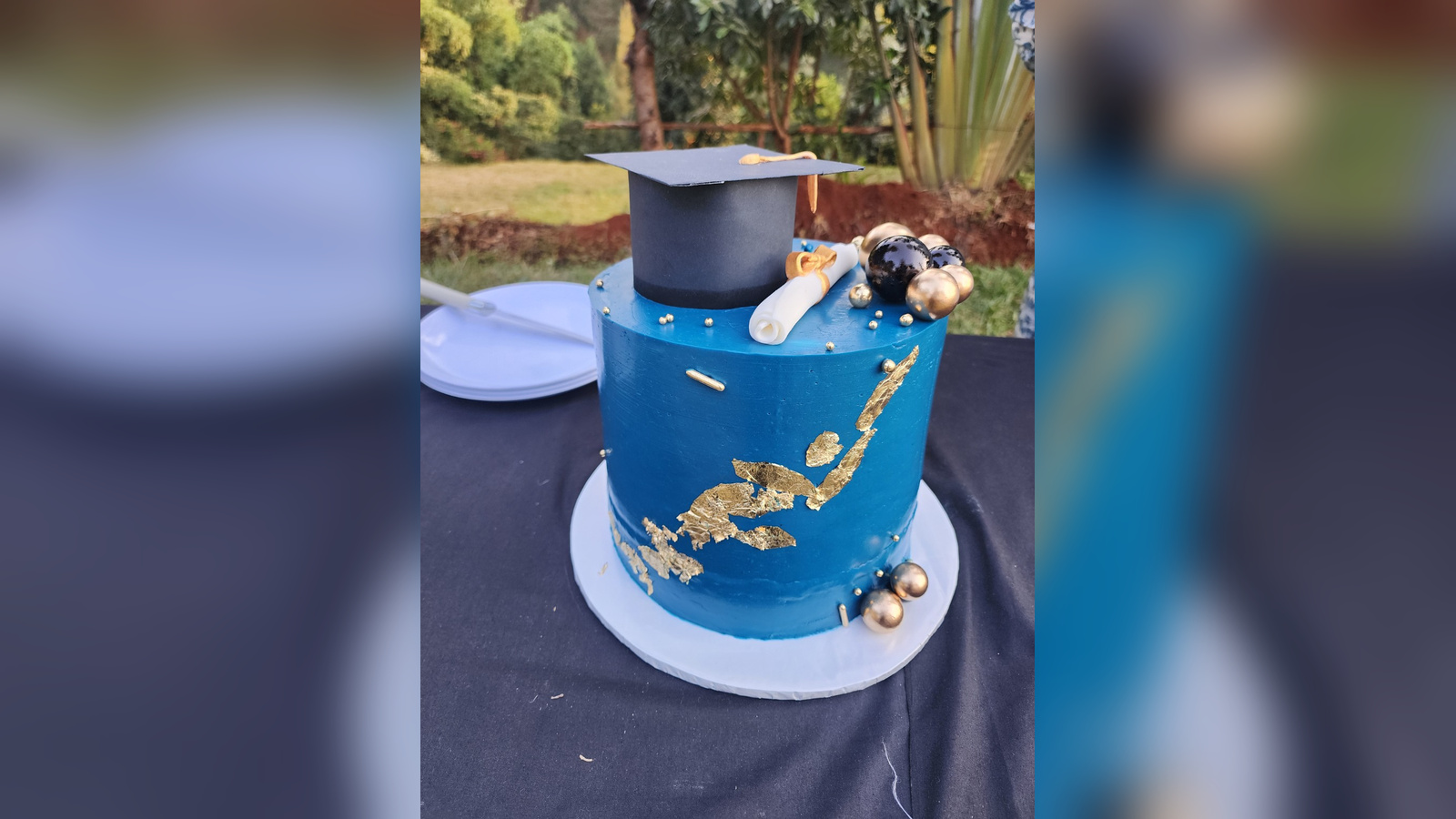
A few weeks ago, I was responsible for bringing the cake to a friend’s graduation lunch. As a good planner, I contacted the baker three weeks before the event, picked the design, paid in full and, of course, gave her the date. I had done my part. Cake was firmly in the happy flow.
The lunch was on a Friday at 2pm. At about 1.30pm, while I was in a cab on my way there, I called the baker. Partly because I wanted to know where the rider was, but also because I found it unusual that she hadn’t reached out to coordinate delivery.
I knew immediately from the silence on the other end that something was wrong.
“What do you mean the lunch is today?”
Then came the panic.
“OMG. OMG. OMG Rachel, this has never happened in my career! Wasn’t it Saturday?”
It was, in fact, not Saturday.
And just like that, the happy flow was gone.
There would be no cake arriving at 2pm for the graduation where I had expressly volunteered to be responsible for the cake. My baker asked me to give her ten minutes to think, which left me with ten minutes to panic and start looking for alternatives. My cab driver, who by this point had heard the entire conversation and was now emotionally invested in the graduation cake, suggested a local cake distributor. I called them. They needed one day’s notice for delivery. Very useful information for next time. Not particularly useful at 1.40pm.
Ten minutes later, the baker called back. She had cakes in the oven. Could she get me something by 5pm?
The event was starting in ten minutes.
We negotiated.
Could we make it 4pm? Lunch would take some time anyway.
She suggested cupcakes. I said no. By this point I had become far too emotionally invested in my original design to surrender to cupcakes.
So I arrived at the venue, found the MC and explained that we had a small situation. Could he stretch things a little? Make everything run slightly longer? Buy me some time?
He did.
At around 5pm, the cake arrived. And somehow, despite all the drama, it was excellent. The design I had been too stubborn to give up on was there, the cake looked beautiful, we cut it, everyone was happy and, other than the MC, nobody at the graduation knew that there had very nearly been no cake at all. I also had a whole new level of respect for my baker, who had gone from “OMG, wasn’t it Saturday?” to pulling off an excellent cake in a matter of hours.
I’ve thought about that story several times since, partly because it’s funny now that it ended well, but also because it captures something I spend a lot of my working life dealing with: the unhappy flow.
In operations, we spend enormous amounts of time designing the happy flow. We build processes, systems, SOPs and automation around how things should work, and we absolutely should. You cannot run a complex operation by having everyone wake up every morning and invent a new way of doing things.
But eventually, every process meets an exception.
In shipping, I see this all the time. A port closes. A vessel misses its window. Weather changes. Cargo doesn’t move as expected. Capacity you thought would be available suddenly isn’t. We may have dealt with a similar situation before, but no two contingencies are exactly the same because the conditions around them are constantly changing.
That is what recently got me interested in the concept of conditional learning. In its simplest form, it is about understanding not only what you know, but when and under what circumstances that knowledge applies.
It gave a name to something operations has taught me over the years: knowing the process and understanding the process are not the same thing.
If you know the process, you know what step comes next. If you understand the process, you understand why that step exists, what assumptions sit behind it and what to do when those assumptions no longer hold.
That’s where judgement starts.
When a contingency happens, one of the first questions we naturally ask is, “What did we do last time?” And it’s a good question. Experience should mean we don’t start from zero every time something goes wrong. But there is another question that matters just as much: “What’s different this time?”
The previous solution gives you somewhere to start. It doesn’t necessarily give you the answer.
My cake problem is a ridiculously simple example. The original process said the baker makes the cake and a rider delivers it before the event. Once that was no longer possible, repeating the original plan harder wasn’t going to produce a cake. The problem had changed. We now had a baker who was willing to completely reorganise her afternoon, cakes already in the oven, a graduation that would run for several hours, an MC who could manipulate the programme and a customer who, for reasons I still can’t fully defend, was unwilling to consider cupcakes.
Those were the conditions we actually had to work with.
The same principle becomes much more important when the stakes are higher. In operations, the unhappy flow is where you discover whether people understand the process or have simply memorised it. It’s where people have to interpret incomplete information, balance competing priorities and work out which parts of the standard response still make sense.
This becomes even more interesting as we automate more of our work. Technology is incredibly good at the happy flow. Give a system clear inputs, predictable conditions and defined rules and it can execute them consistently and at scale. And increasingly, it should.
But the unhappy flow isn’t going anywhere.
There will still be moments when the information is incomplete, the conditions have changed or the theoretically correct solution simply isn’t available. Those moments require people who can understand the objective, read the situation in front of them and adapt.
It is also why I believe strongly that developing people can’t stop at teaching them the process. They need opportunities to work through exceptions, understand why decisions were made and make some decisions themselves. If we solve every exception for our teams, we risk taking away the very experiences that help them build judgement.
Strong processes matter. Standardisation matters. Automation matters. None of that is in conflict with adaptability. In fact, the better our happy flow becomes, the more attention we can give to building the capability to deal with everything that falls outside it.
Because whether you’re moving cargo around the world or trying desperately to get a graduation cake delivered before everyone goes home, eventually something will not go according to plan.
And that’s when things get interesting.
Leave a Reply